
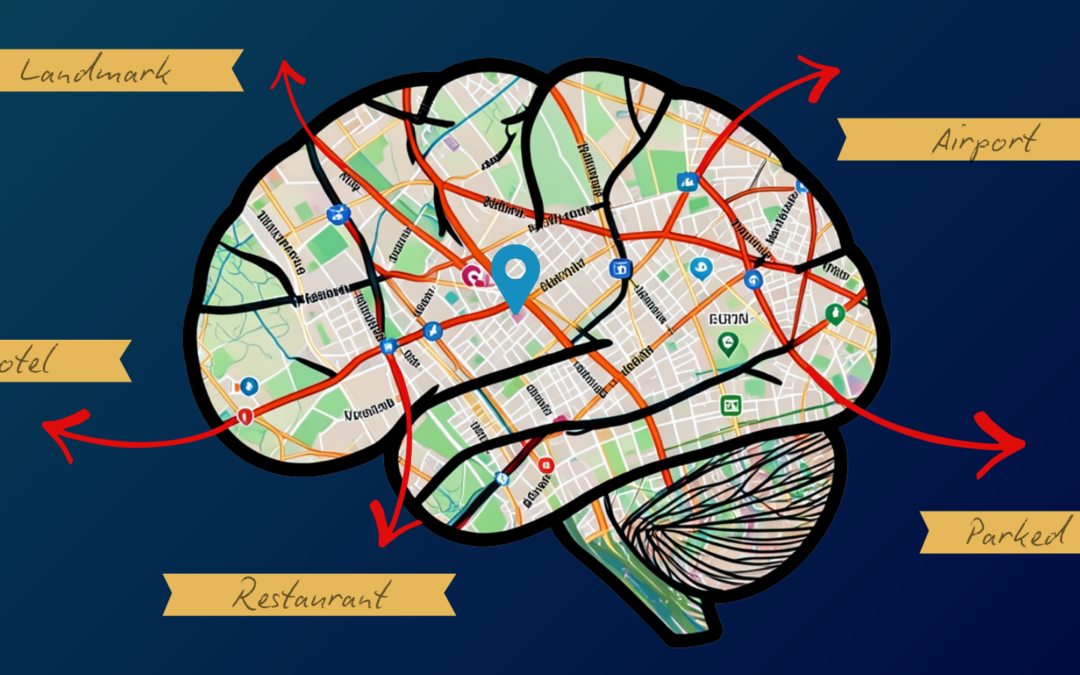
Ever found your way directly back to your car after a Dodgers game? Or walked into the kitchen in the dark and somehow made it back to bed without stepping on a rogue Lego? That sense of where you are – and how to get where you want to be – is part of your brain’s built-in GPS, and it’s nothing short of miraculous. Only it’s not GPS in the way your phone thinks about it. It’s more subtle, way cooler, and rooted deep in our nervous system and evolutionary past.
Let’s examine not only how humans navigate the world – from muddy mountain trails to maze-like shopping malls – but also why some of us are naturally better wayfinders than others, how we use different sensory cues, how this compares to other mammals, and even how you might sharpen your own internal compass. Ready? You’re going to love this…
Inside your brain’s navigation control room
Although humans are primarily visual mammals, we don’t really navigate with any single magical sense. Rather, it’s a cocktail of cues, all blended by a handful of brain systems into something we experience as where am I? and how do I get back? Two major concepts help explain this cocktail:
- Cognitive maps: your brain’s internal representation of space, something like a mental terrain map. Neuroscientists have identified map-like codes in the hippocampus and entorhinal cortex of the human brain, the very same structures that encode spatial relationships in other mammals. Studies show these areas build and use representations of space to help you plan routes and remember locations.
- Head-direction cells: specialized neurons that act like a compass needle in your brain, firing when you face a particular direction, regardless of your actual location. These were first discovered in animals but are part of the navigation network in humans too.

Picture this: you walk into a new room at a friend’s house. Within moments your brain gets a sense of which way is north, which wall has the door, where the sofa sits relative to the window. That’s your internal map hooking up with sensory cues to give you a working orientation, and it updates continuously as you move.
One especially cool piece of research from neuroscientists at Harvard Medical School shows just how important visual landmarks are to this system: when those landmarks are present, the brain’s course-sensing neurons reorganize rapidly to maintain an accurate sense of direction; without them, orientation becomes less stable.
Routes vs. maps: Two navigation styles
Navigation scientists (yes, that’s a real career) often talk about two broad strategies our brains use:
- Egocentric navigation: this is route-following, based on a sequence of steps from your point of view (“left at the mailbox, right at the big oak”). This feels like remembering a path you’ve taken before.
- Allocentric navigation: more like understanding the layout of an area independently of your current position (“the bakery is east of the park”). This feels like map thinking.
Most of us use both. On a familiar commute to work, you probably use egocentric cues – the same turns you’ve followed a thousand times. In a new city? You lean much more on allocentric strategies, identifying big landmarks and spatial relationships.

Here’s the interesting part: people vary widely in which strategy they prefer and how efficiently they use it. Some of this comes down to brain wiring and experience. Neuroscientists like Mary Hegarty at the University of California, Santa Barbara have spent years studying these individual differences. Research suggests roughly half of us lean toward one style and half toward the other, and that preference correlates with which brain regions are more developed or more actively used. People who are strong spatial reasoners tend to build more comprehensive mental maps and use cues more flexibly.
This helps explain why your friend can find their way around a new town without GPS while you circle the same block three times, wondering where on earth you parked your car.
It takes a sensory village…
If you think navigation is all about vision, you’re in for some fun surprises. Your sense of direction is a multisensory integration feat. Here’s who’s on the team:
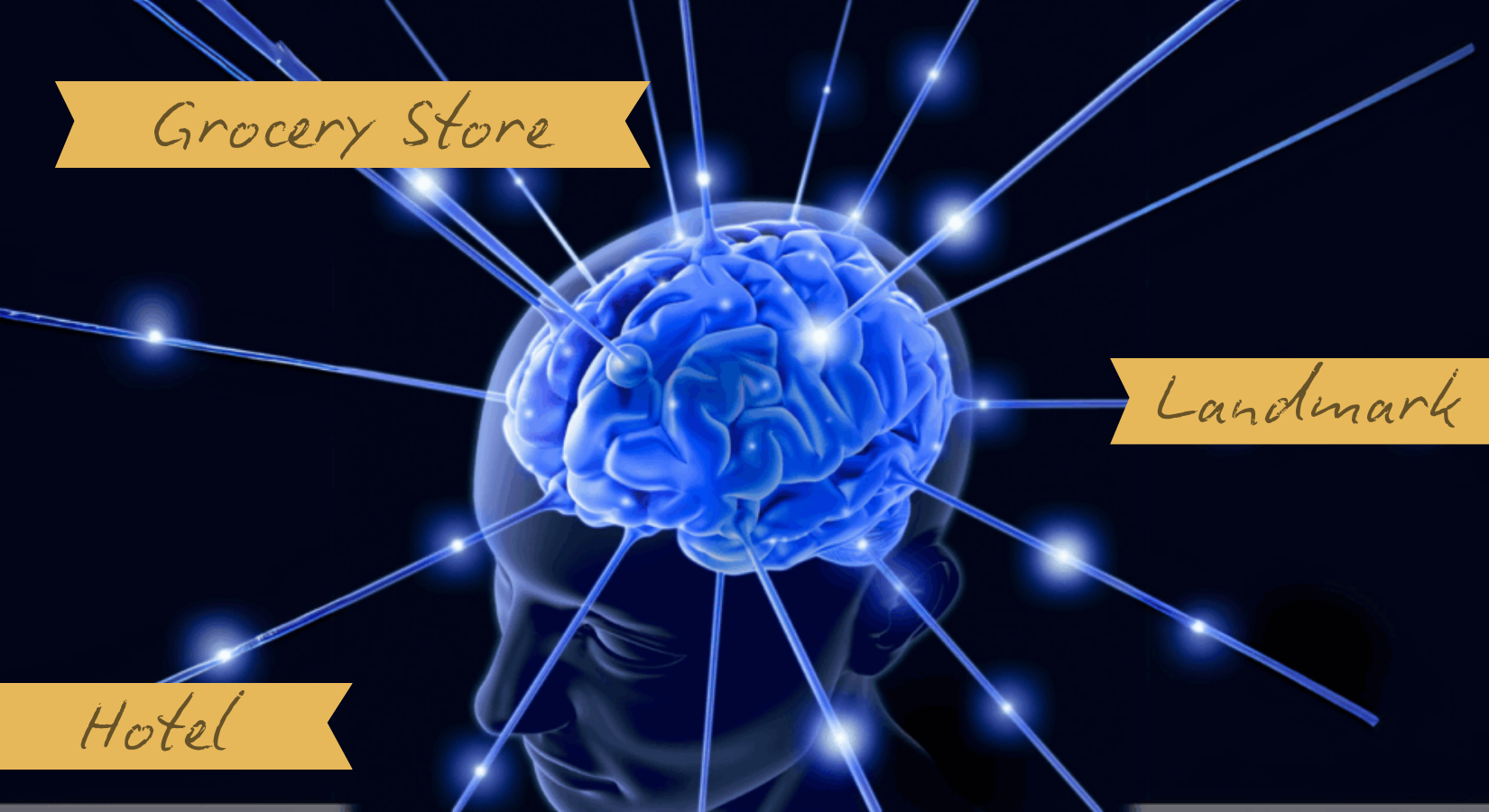
Vision (big time)
Landmarks like trees, buildings, and stars (yes, even stars!) help anchor the internal map. And if landmarks rotate, the internal map follows.
Vestibular system (inner ear)
Your built-in motion detector. It tells your brain you turned, stopped, or started moving again. Without it, your map gets fuzzy.
Proprioception (body sense)
Your sense of where your limbs and torso are, how far you’ve walked, and how your body rotated. It supports path integration – tracking where you are relative to where you started – even without visual cues. (Note: I wrote an entire article on proprioception, because it’s just so dang cool! In case you missed it, here’s the link.
Optic flow (visual motion patterns)
Even if you can’t name a landmark, the way the world flows past you as you move provides constant information about movement and distance.
All of these feed into your brain’s navigation networks, stitched together into a coherent sense of where am I? and which way was back? – usually without any conscious effort.

Why some people are way better (or worse) at this
You’ve probably heard someone say, “I have no sense of direction.” Turns out, that’s not just a figure of speech. There’s real variability in navigational skills.
Part of it is experience. If you’ve spent time hiking, studying maps, or exploring unfamiliar places, you’ve literally exercised those allocentric navigation circuits and strengthened them. Use it, grow it.
Other differences are innate – tied to how your brain networks developed or which strategies you default to. Some people naturally build stronger global maps; others rely more heavily on memorized routes. Some integrate sensory cues more efficiently than others.
Men and women, on average, show different styles in navigation tasks – but not differences in overall ability. Factors like age, environment (urban vs. rural upbringing), specific training (like orienteering or certain video games), and physical fitness influence navigational ability. But here’s the kicker: everyone has a navigation style, and understanding yours lets you work with it instead of against it.
Brains, beaks, and noses: Different paths to orientation
Humans aren’t unique in having a sense of direction – far from it. Many mammals, birds, and even insects build cognitive maps of their surroundings. The differences lie in scale and emphasis:
- Rodents and small mammals often rely heavily on tactile, olfactory, and close-range cues in tight environments, producing remarkably precise maps.
- Predators like wolves (and your adorable puppy dog) depend heavily on scent trails to orient where vision might be limited.
- Migratory animals like birds and sea turtles use magnetic fields and celestial cues that humans mostly ignore.
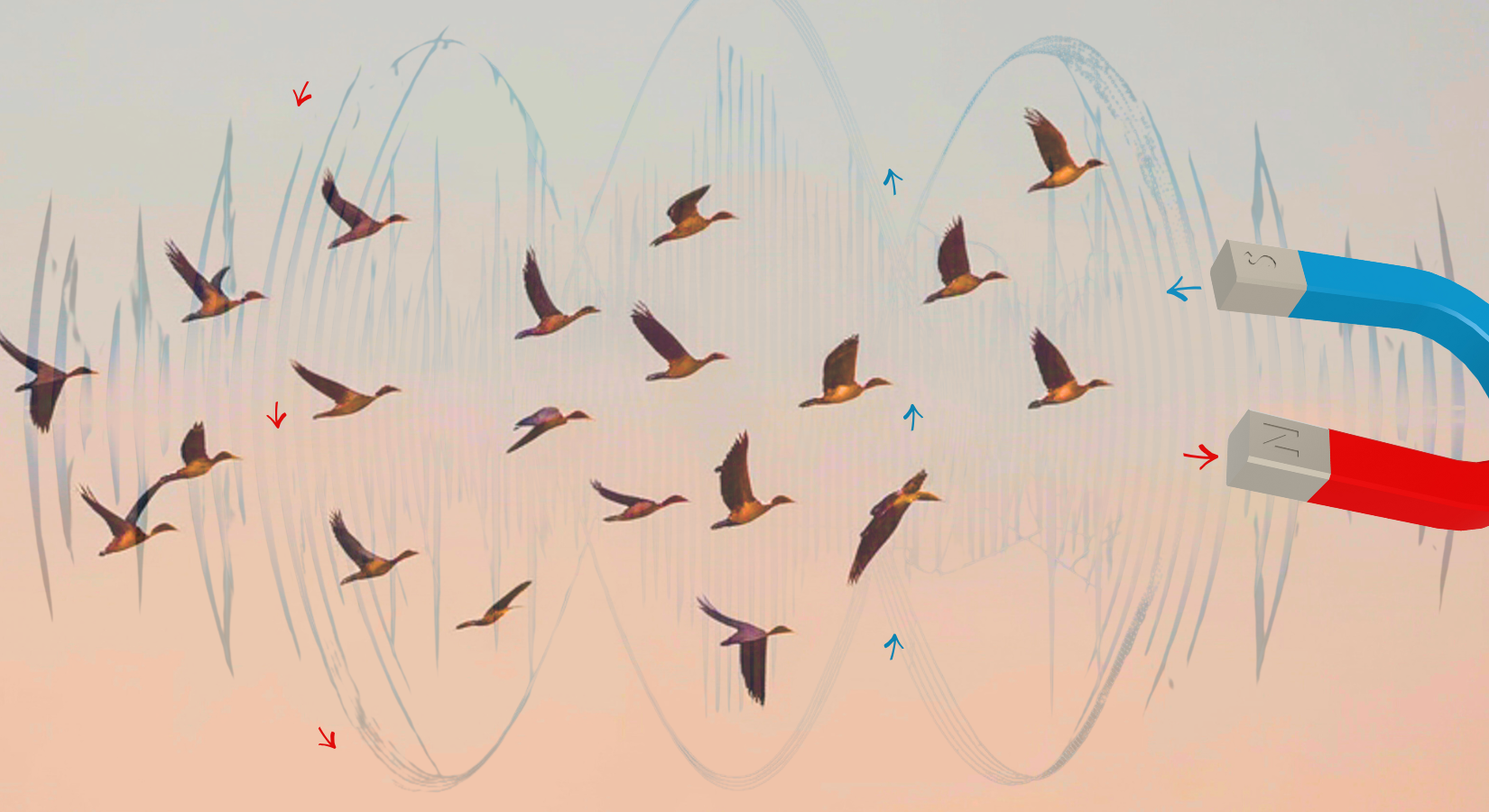
Humans, with our powerful visual systems and layered cognitive maps, excel at flexible navigation in novel environments, though we can’t match a homing pigeon’s magnetic sense or a bat’s echolocation. Still, the architecture of spatial maps and head-direction networks is strikingly shared across mammals.
Outdoors vs. indoors: Different rules of the road
Wayfinding in a forest trail vs. a windowless office building? Totally different game.
Outdoors, we rely on:
- distant visual landmarks
- sun position and shadows
- gradients of light
- optic flow from moving landscapes
Indoors, those cues largely disappear. Instead, we depend on:
- architectural cues (doors, hallways)
- memory of layout
- changes in flooring or ceiling patterns
- auditory cues like footsteps and echoes
Without reliable landmarks, our internal compass recalibrates more often, and we lean more heavily on route memory than map-like representations of space.
Can you improve your sense of direction?
Heck yes! I’m glad you asked. DO try this at home:

Exercise your map network.
Deliberately explore a new neighborhood without GPS. Then try creating a mental map, or sketching it afterward. You’ll engage and strengthen your allocentric strategies.
Pay attention to landmarks.
Name them. Notice how they relate to one another. This trains your map orientation systems.
Practice path integration.
With a friend’s help, walk short distances with your eyes closed (safely!) and see if you can track direction and distance.
Mix senses.
Actively listen, tune into motion in your body, note shadows and optic flow. Navigation isn’t just seeing; it’s sensing.
With a little mindful attention, coupled with a few intentional exercises, you can sharpen your brain’s navigation circuits just like any other skill.
Navigation: Quiet, complex, and totally amazing!
Our sense of direction is one of those overlooked brain superpowers we rarely stop to think about – right up there with balance, timing, and knowing where our limbs are without looking. But once you peek under the hood, it’s hard not to be impressed.
Wayfinding isn’t luck or talent; it’s a beautifully integrated system of brain maps, sensory signals, and learned strategies that can be strengthened with attention and use. The more you explore, notice landmarks, and trust your internal cues, the better your brain gets at stitching the world together. And with a little practice, you may find yourself navigating a new city, a complex office building, or even the Canadian wilderness with a bit more confidence – and a lot less reliance on that glowing blue dot!