

How to think when you’re too tired to think (Spoiler: your brain has a cheat code)
Some days you can solve problems, plan a vacation, negotiate a raise, and make dinner using only pantry scraps and one limp carrot. Other days, you spend ten full minutes staring at a sock, trying to figure out if it’s clean, or even yours.
This article is for those days.
I always love starting with the good news: your brain expects you to be tired sometimes. In fact, it’s counting on it, and that’s why it’s developed clever workarounds for low-energy moments. Your very amazing brain comes preloaded with some mental shortcuts called heuristics – a fancy psychology term for “quick rules of thumb that help you make decisions without burning brain fuel.”
Heuristics are awesome. They’re your brain’s clever cheat codes – fast, practical, energy-saving strategies that work just well enough to get you through the day without collapsing in a puddle of indecision.
And yes, these shortcuts evolved to help you survive. So, the next time you grab the same brand of peanut butter for the umpteenth time or follow the crowd at a confusing train station, you’re tapping directly into evolutionary genius.
Let’s take a fun and factual stroll through the science of decision-making fatigue, cognitive shortcuts (a.k.a., heuristics), and evolution’s greatest hits in mental efficiency!
The mental energy budget (and why you run out)
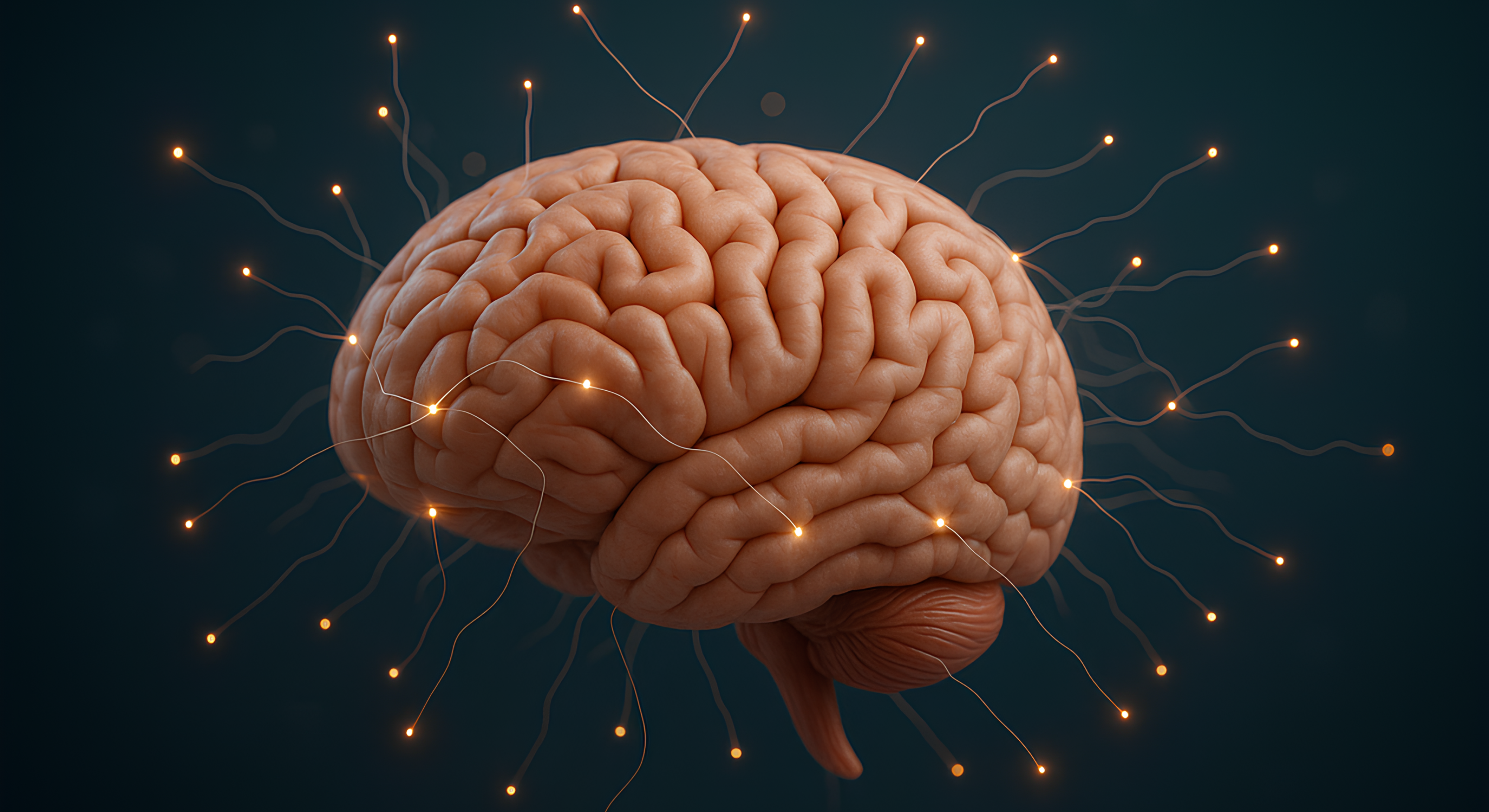
Our brains are surprisingly thrifty. Although the brain accounts for only about 2% of your body weight, it burns roughly 20% of your total daily energy. And that’s just during regular functioning – not when you’re stressed out, multitasking, or overloaded with too many tasks.
The brain loves a shortcut because it’s expensive to run. According to Daniel Kahneman (Nobel Prize–winning psychologist and author of Thinking, Fast and Slow), we use two kinds of thinking systems:
System 1: Fast, automatic, intuitive (a.k.a., your autopilot)
System 2: Slow, effortful, logical (a.k.a., your inner chess master)
When you’re rested and focused, System 2 is ready to go. But when you’re exhausted, multitasking, or halfway through a “What even IS my life?” moment, your brain defaults to System 1. That’s not a bad thing. It’s just your brain conserving energy by relying on familiar patterns.
System 1 uses heuristics to help you survive the cognitive equivalent of a zombie apocalypse – or your overloaded inbox.
A brief history of being smart the lazy way
Let’s travel back to the good ol’ Pleistocene days. You’re a hunter-gatherer. You’ve been tracking game all day. You’re dehydrated, sunburned, and running low on glucose (because prehistoric snacks were terrible), when suddenly, you hear rustling in the bushes.
Now’s not the time to weigh probabilities…you need a shortcut. So, your brain does what it’s built to do: it makes a quick judgment based on pattern recognition. Rustling spells danger. You bolt.
So, evolution gave us heuristics: mental shortcuts that speed up decision-making in environments where time, attention, and safety were all at stake. These heuristics are still in play today. We’re still wired to rely on them, especially when we’re running on empty.

Heuristics today: 21st century applications
Fast forward to today: you use heuristics all the time, whether you know it or not. And in the right situations, they’re not just useful, they’re downright brilliant. Here are a few of the MVPs:

- The recognition heuristic
- If something’s familiar, we trust it. That’s why we buy the shampoo we’ve seen in commercials or trust the restaurant we’ve walked past a hundred times.
- Use it when: You don’t have time to research every option. Familiarity usually signals reliability – or at least predictability.
- The “good enough” heuristic (a.k.a., satisficing)
- Instead of aiming for the best option, you choose one that meets your basic criteria. It’s called “satisficing,” and it’s a valuable psychological strategy. This is the thinking behind eating cereal for dinner or picking the same hiking trail every weekend.
- Use it when: You’re tired of comparing. Your brain says, “Let’s just choose something and get on with it.” And that’s OK, because you’re not in a do-or-die situation.
- The social proof heuristic
- When you’re unsure, you do what others are doing. It’s not just peer pressure; it’s a survival strategy.
- Use it when: You’re making a quick decision in a new environment (e.g., “Which exit should I use in this unfamiliar airport?” Hint: Follow the crowd).
- The default heuristic
- When faced with a choice, we often go with the default. Why? Because change takes energy. That’s why most people leave their phone settings as-is, or choose whatever salad dressing is listed first on the menu.
- Use it when: You’re setting up systems. Choose good defaults now, and your future tired self will thank you.

The pitfalls of heuristic shortcuts (and how to dodge them)
Now, to be fair, heuristics aren’t magic. They have their limitations. And, just like tabasco sauce or perfumy aftershave, they’re best used in moderation. Watch out for:
- Confirmation bias: You’ll gravitate toward information that supports what you already believe – especially when you’re tired. You’re likely to ignore contrary evidence.
- Over-reliance on familiarity: Just because something is recognizable doesn’t mean it’s good for you. Exhibit A: microwave nachos. (And yes, I’m guilty.)
- Wrong place, wrong time: Heuristics help in low-stakes decisions. But don’t pick a business partner or sign a mortgage based solely on ten seconds’ worth of deliberation coupled with a “gut feeling.”
So, what can I do when all my energy has peaced out?
OK, now we’re getting to the fun part: the “DO try this at home” section that I’ve started including in my recent articles. (Thanks for the feedback, friends! Your wish is my command.) These are real-life hacks for when your mental battery is flashing red:

- Front-load your day with tough decisions
- System 2 (the careful thinker in you) is freshest in the morning. Handle the tricky stuff before your brain rebels and takes a vacay, because by 8pm, you’re better off choosing pajamas than making career moves.
- Build “if/then” scripts
- “If I’m asked to work late, then I’ll politely decline and suggest tomorrow morning instead.” Or, “If someone interrupts me during writing time, then I’ll smile, ask to talk later, and return to work.” Scripts reduce the energy it takes to respond thoughtfully. They take the pressure off when you’re tired and tempted to say yes to everything – or to say something you’ll regret.
- Design your environment to help you
- Keep healthful snacks on hand. Move tempting distractions, like video games, out of sight. Place your walking shoes by the front door. Your tired brain will follow the path of least resistance, so make that path the smart one.
- Reduce your daily decision load
- Too many options = decision paralysis. Instead, create routines. Eat the same breakfast. Wear your “Tuesday shirt” every Tuesday. Pick three restaurants you like and rotate through them. Call your sister every Sunday afternoon. Every tiny decision saved is one more drop of brain fuel.
- Automate like a pro
- Auto bill pay, direct deposit, online banking, calendar alerts, pre-scheduled monthly appointments with the dog groomer, recurring grocery orders. Automation is the 21st-century version of evolutionary advantage. Look around your life and see what you can delegate to your robot army!

The lazy genius in you
You don’t need to be firing on all cylinders 24/7 to make good choices. In fact, sometimes the most efficient, effective, and even wise decisions come from trusting your brain’s built-in shortcuts. You’re not being lazy; your brain is making trade-offs the way it evolved to – by preserving resources for the stuff that really matters.
So, the next time you’re foggy brained, crashed out on the couch, and you’ve just made the brilliant decision to eat potato chips for dinner, congratulate yourself. You’re operating in genius caveperson-conservation mode!

What an amazing reading and knowlage. Thank you Denise