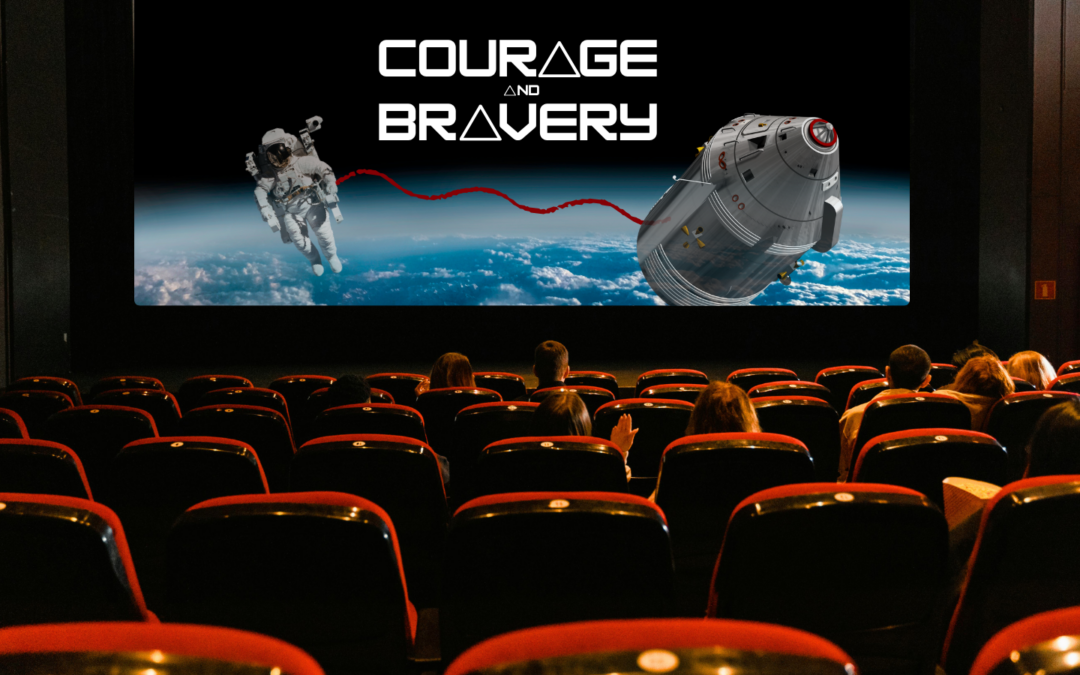
I went to see Project Hail Mary with a friend last week. She’d read the original novel—published in 2021 by Andy Weir—no fewer than three times and had been eagerly anticipating the film for months. Me? I went in knowing absolutely nothing about the storyline. I was simply looking for a fun evening and a chance to spend time together.
I liked the movie very much—two thumbs up. But what I didn’t expect was to walk out thinking about a single line that stayed with me long after the credits rolled:
“You don’t have to be brave. You just need to find someone to be brave for.”
I found myself returning to that line later that evening, and again the next morning. It’s a deceptively simple idea, and the more I thought about it, the more it seemed to reflect something deeply true about human behavior—something we don’t always articulate, even though we experience it all the time.
We’re wired for connection (whether we realize it or not)
We tend to think of courage as an individual trait, something we either have or don’t have, something we summon from within when circumstances demand it. But when you step back and look at human behavior more broadly, a different picture begins to emerge. We are not, at our core, solitary creatures relying only on internal reserves. We are deeply social beings, shaped and supported by our connections with others.
This idea is well supported in the research. Psychologist Shelley Taylor and her colleagues proposed what is known as the tend-and-befriend response. In contrast to the more familiar fight-or-flight response, this model suggests that in times of stress, people often move toward others rather than away from them. We protect, we nurture, and we seek connection.

What’s especially compelling is that this isn’t just a social preference; it’s a biological response. Engaging in caregiving and connection can reduce physiological stress, partly through the release of oxytocin, which helps regulate fear and promote a sense of calm. In practical terms, when our attention shifts toward helping, supporting, or protecting someone else, our own sense of fear often diminishes. That alone begins to challenge the idea that courage must come from within as a solitary act of willpower.
Why it’s often easier to be brave for someone else
If we pause and reflect, most of us have already seen this pattern in our own lives. It’s often easier to stand up for someone else than it is to advocate for ourselves. We give clear, thoughtful advice to friends, yet hesitate when we’re the ones who need to act. We rise to the occasion when someone is counting on us, even in situations where we might otherwise hold back.

A growing body of research supports this phenomenon. Work by Ethan Kross at the University of Michigan has shown that when people take a “self-distanced” perspective—essentially stepping outside themselves and thinking about a situation as if they were advising another person—they are better able to regulate emotions and make effective decisions. In studies published in the Journal of Personality and Social Psychology, participants who used this approach experienced less distress and performed better under pressure.
What’s happening here is subtle but powerful. When we shift perspective, the emotional intensity of the moment softens. The internal noise—the doubt, the over-analysis, the fear of getting it wrong—quiets just enough to allow clearer thinking. And with that clarity often comes action. In that sense, the line from the film captures something quite precise. We may not need to become braver people so much as learn how to change the frame through which we’re viewing the situation.
It’s not just bravery we borrow
As I continued thinking about this idea, something else became clear. It isn’t just bravery that becomes more accessible when other people are involved. In many ways, we become slightly better versions of ourselves in the presence of purpose and connection.
We tend to be more disciplined when someone else is counting on us. We follow through more reliably, prepare more thoroughly, and stay focused a little longer. We are often more compassionate when others are hurting, more patient when understanding is needed, and more persistent when the outcome matters beyond our own immediate comfort.

In other words, it’s not just courage that’s influenced by connection. A whole range of human capacities seem to strengthen when our actions are tied to other people. This aligns with a broader principle in psychology: humans are not purely self-motivated creatures. Our behavior is shaped not only by our own goals and desires, but also by our relationships, our responsibilities, and our sense of impact on others. Seen through this lens, “borrowing bravery” becomes part of a larger pattern. We’re not manufacturing new traits out of thin air; we’re accessing abilities that are already there, but become more available when the situation expands beyond the self.
Borrowing strength from purpose
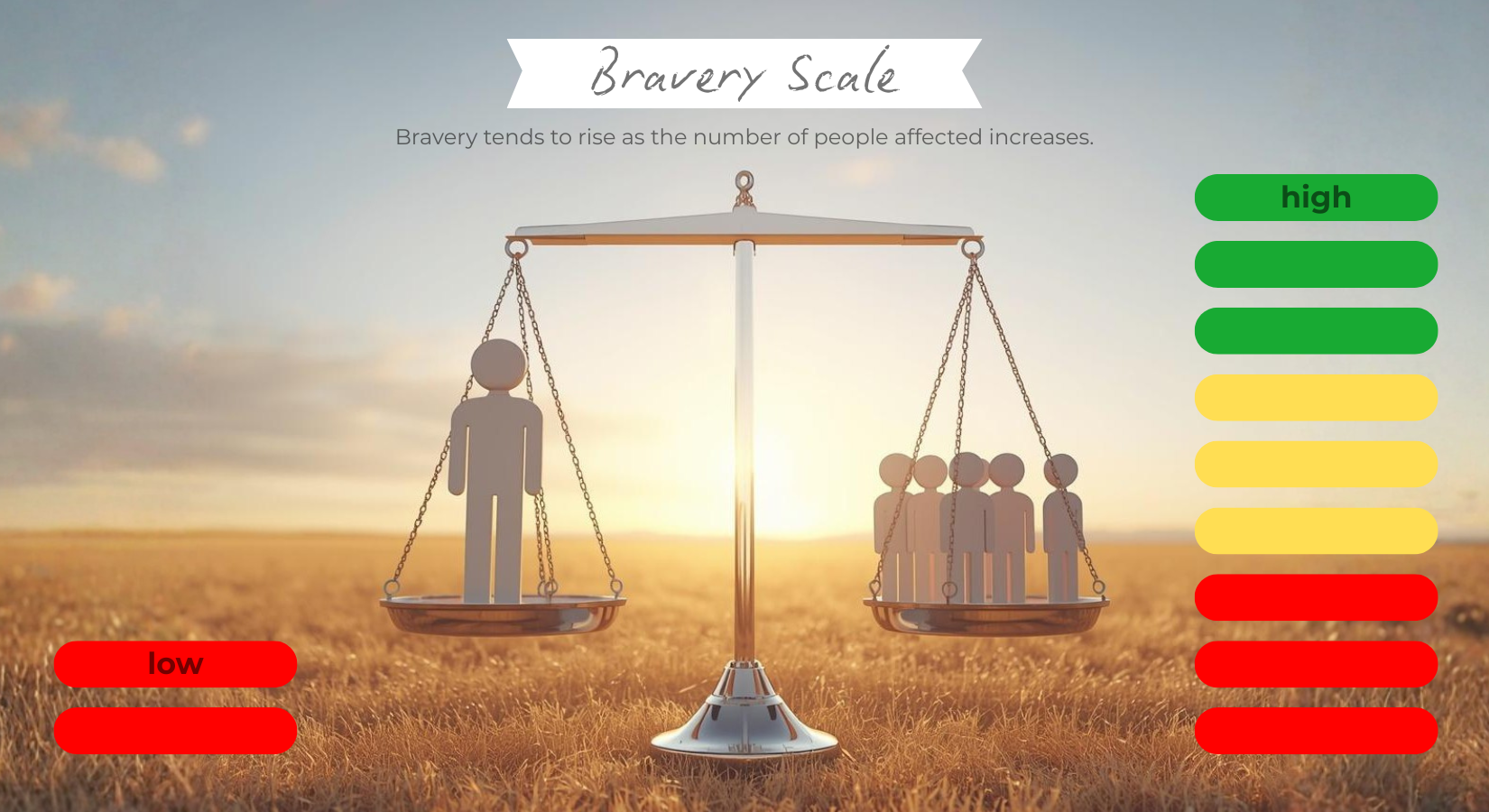
I found myself thinking about all of this in a very personal way. Years ago, when I was founder and CEO of a large training company, I had approximately 350 employees. That number wasn’t just a statistic to me—it represented hundreds of individuals with responsibilities, families, and lives that were, in a very real way, affected by the decisions I made.
At the time, I wouldn’t have described my mindset as “being brave.” But I was acutely aware that my role required me to make decisions that extended far beyond my own experience. I thought about the people behind those roles—their mortgages, their children, their day-to-day realities—and that awareness shaped how I approached difficult moments.
When decisions were challenging or uncertain, I didn’t experience them as purely personal risks. Instead, they felt like shared responsibilities. The focus shifted from “What if I get this wrong?” to “What needs to be done here, for all of us?” That shift, subtle as it sounds, made difficult decisions feel more grounded and doable.
This perspective aligns closely with research on prosocial motivation. Organizational psychologist Adam Grant and his colleagues have demonstrated that when people understand how their work benefits others, their persistence and performance increase significantly. In one well-known study, university fundraising callers improved their performance dramatically after being exposed to stories of students who benefited from scholarships. Purpose, it turns out, isn’t just motivating—it can also be stabilizing, helping to organize our attention and reduce the stress that often accompanies uncertainty.
What your brain does when it’s not just about you
There’s also a neurological explanation for why this shift feels so powerful. When we engage in actions that benefit others, the brain’s reward system becomes more active. Studies using functional MRI have shown increased activation in regions such as the ventral striatum, which is associated with reward and motivation. Dopamine also plays a role in reinforcing these behaviors, making them feel meaningful and worth pursuing.
This combination creates a physiological environment that supports action rather than avoidance. When we reframe a situation from “This is about me” to “This matters to someone else,” we’re not just changing a thought—we’re altering the balance of signals in the brain, shifting away from threat and toward purpose. That shift can meaningfully influence how we approach challenging situations.
Maybe your bravery has been there all along
One of the most reassuring aspects of this perspective is what it suggests about courage itself. Many of us are not lacking in bravery. Instead, our courage tends to appear reliably under certain conditions, particularly when other people are involved.
We see it when someone needs help, when something feels unfair, or when a person we care about is depending on us. In those moments, we often act with far less hesitation. The doubt may still be present, but it no longer dominates the decision.
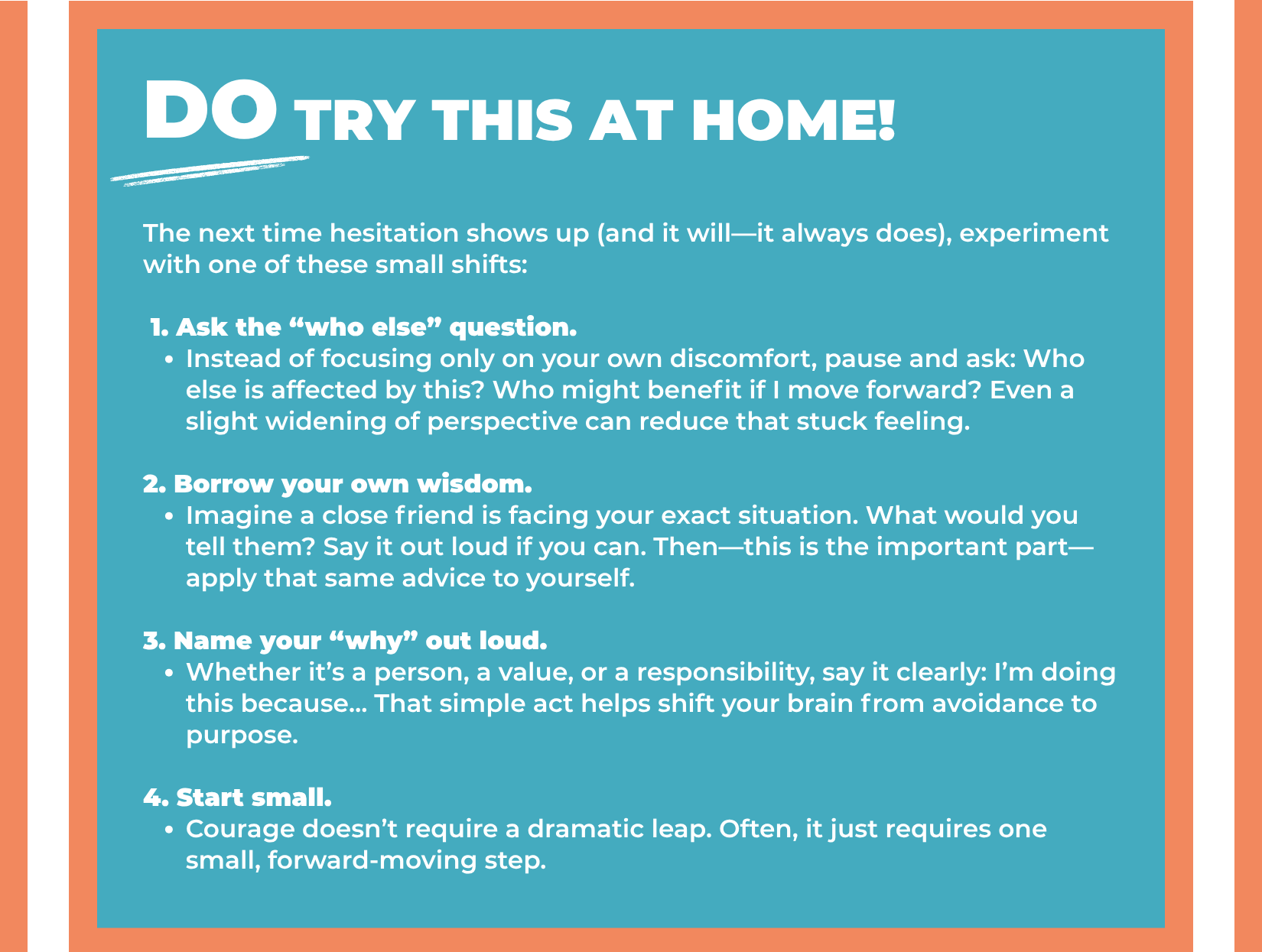
This raises an interesting possibility. What if courage is not a rare trait that only some people possess, but rather a capacity that exists in most of us—one that is highly sensitive to context? When the focus shifts beyond our own immediate concerns, our willingness to act often grows right along with it. If that’s the case, then the question isn’t so much whether we have courage, but how we access it when we need it. And fortunately, there are a few simple ways to make that shift in the moment.
You don’t have to do this alone (even when it feels like you are)
That line from Project Hail Mary stayed with me because it gently reframes something many of us have misunderstood for a long time. We tend to think of bravery as something we must generate on our own, in isolation, as if it were a personal reserve we either have or don’t.
But in many cases, bravery doesn’t work that way. It emerges from connection, from responsibility, and from the quiet awareness that what we do can matter to someone else.
If we can be braver for other people—if we can be more disciplined, more compassionate, more persistent when someone else is part of the equation—then perhaps those qualities were never missing to begin with. Perhaps they’ve been there all along, waiting for the right conditions to come forward.
Consider this hopeful possibility. What if we simply need to learn how to access the parts of ourselves that already appear so reliably for others—and, just occasionally, offer that same support to ourselves.
You don’t always have to feel brave. Sometimes it’s enough to remember who you’re being brave for. And maybe, just maybe, that person can be you.