

Most of us spend attention the way we eat popcorn at a movie theatre: mindlessly, continuously, and often without realizing how much is disappearing in the process. (And yes, that analogy wasn’t hard to come by…I’m totally guilty of eating popcorn this way!)
We scatter our focus across notifications, background television, endless browser tabs, unfinished conversations, doomscrolling, email alerts, advertising, low-grade worries, and the sudden urgent need to research the mating habits of octopuses while trying to pay the utility bill. Then we wonder why we feel mentally exhausted by 3pm.
We often assume that difficulty concentrating is some sort of personal failure, as if scattered attention automatically means we’re undisciplined or unmotivated. We tell ourselves we need more productivity hacks, more willpower, more self-control, or perhaps a more expensive planner with color-coded tabs and inspirational quotes.
But neuroscience suggests something much more interesting—and far less judgmental:
Your brain is overloaded.
And unlike motivation, attention is not something you can simply manufacture by trying harder. It’s tied directly to biology, energy use, stress physiology, memory systems, emotional regulation, and the very real limits of human cognition. In other words, your brain is not an infinitely expandable storage unit. It’s more like trying to run sophisticated software on a laptop with forty-seven tabs open.
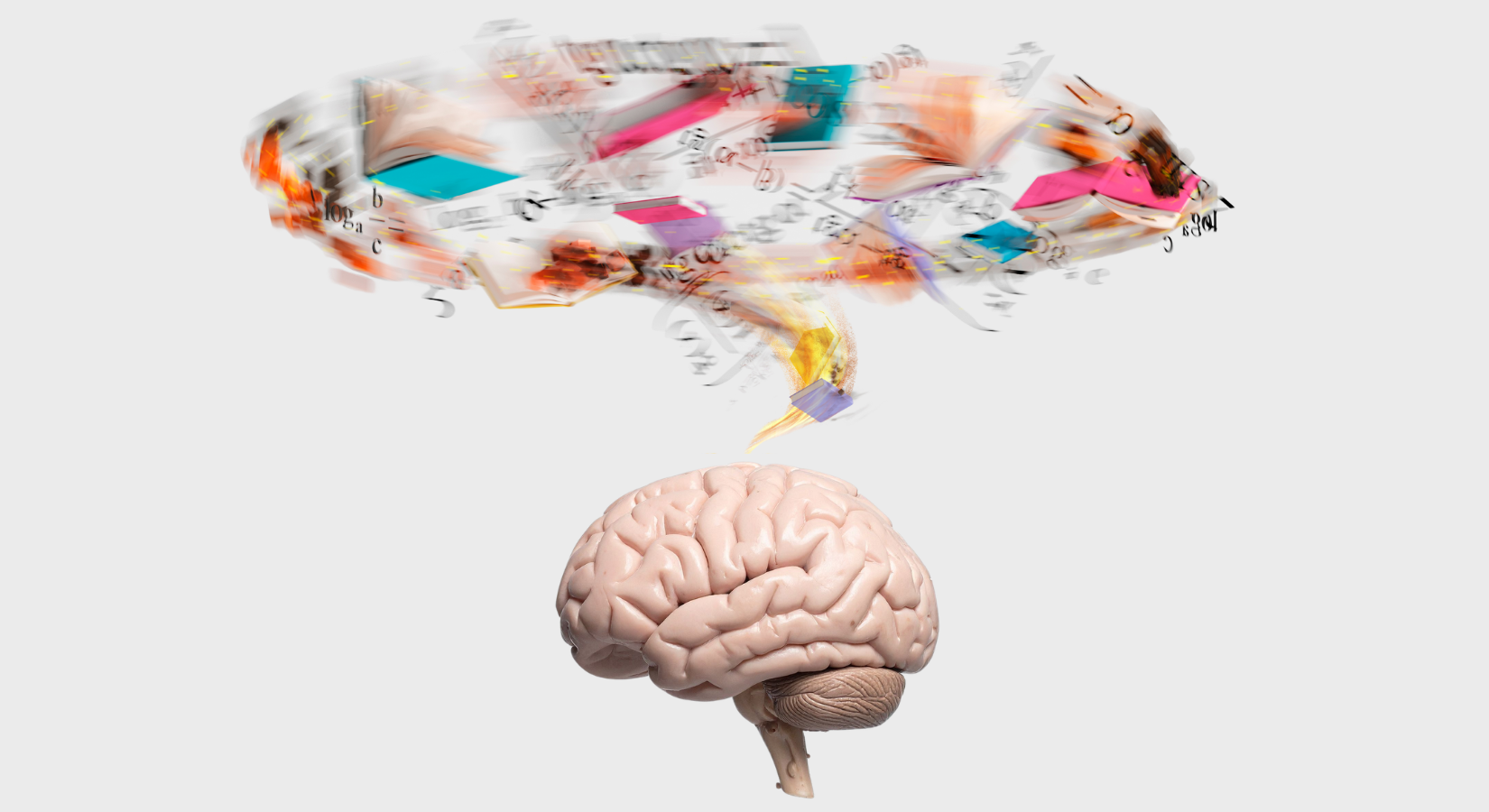
In simple terms, your brain is not designed for this much input.
The human brain evolved in environments that were dramatically quieter, slower, and less stimulating than modern life. For most of human history, incoming information mostly involved things like weather changes, nearby conversations, facial expressions, or interpreting whether rustling grass might signal danger. But these days, your brain is exposed to headlines from six continents before breakfast.
Researchers estimate that the brain receives enormous amounts of sensory input every second, although only a tiny fraction reaches conscious awareness. Much of the brain’s job is not actually noticing information, but filtering information out. Your nervous system is constantly deciding what matters, what doesn’t, what deserves a response, and what can safely fade into the background.
That filtering process is remarkably expensive. Although the brain represents only about 2% of body weight, it consumes roughly 20% of the body’s energy at rest. Focused attention requires coordination between systems involved in executive control, working memory, inhibition, decision-making, and emotional regulation. Concentrating isn’t passive. It’s active biological work.
This may be one reason many people feel mentally depleted after a day filled with emails, texts, meetings, interruptions, errands, and constant task-switching. You may not have lifted anything heavier than a coffee mug, but cognitively speaking, your brain has been sprinting laps around the building all day.
Multitasking is mostly a beautiful lie
Humans love believing we are excellent multitaskers. But neuroscience continues to respond with the scientific equivalent of, “Yeah, right…”
Research from places like Stanford University has repeatedly shown that heavy multitaskers tend to perform worse on tasks involving attention, memory, and filtering irrelevant information. What we casually call multitasking is usually rapid task-switching, and every switch comes with a neurological cost.
Imagine trying to cook dinner while simultaneously answering emails, listening to a podcast, checking social media, switching the laundry, texting a friend, and remembering whether you offended someone during a meeting three weeks ago. Even when we appear to be functioning normally, the brain is constantly disengaging, reorienting, and reloading.
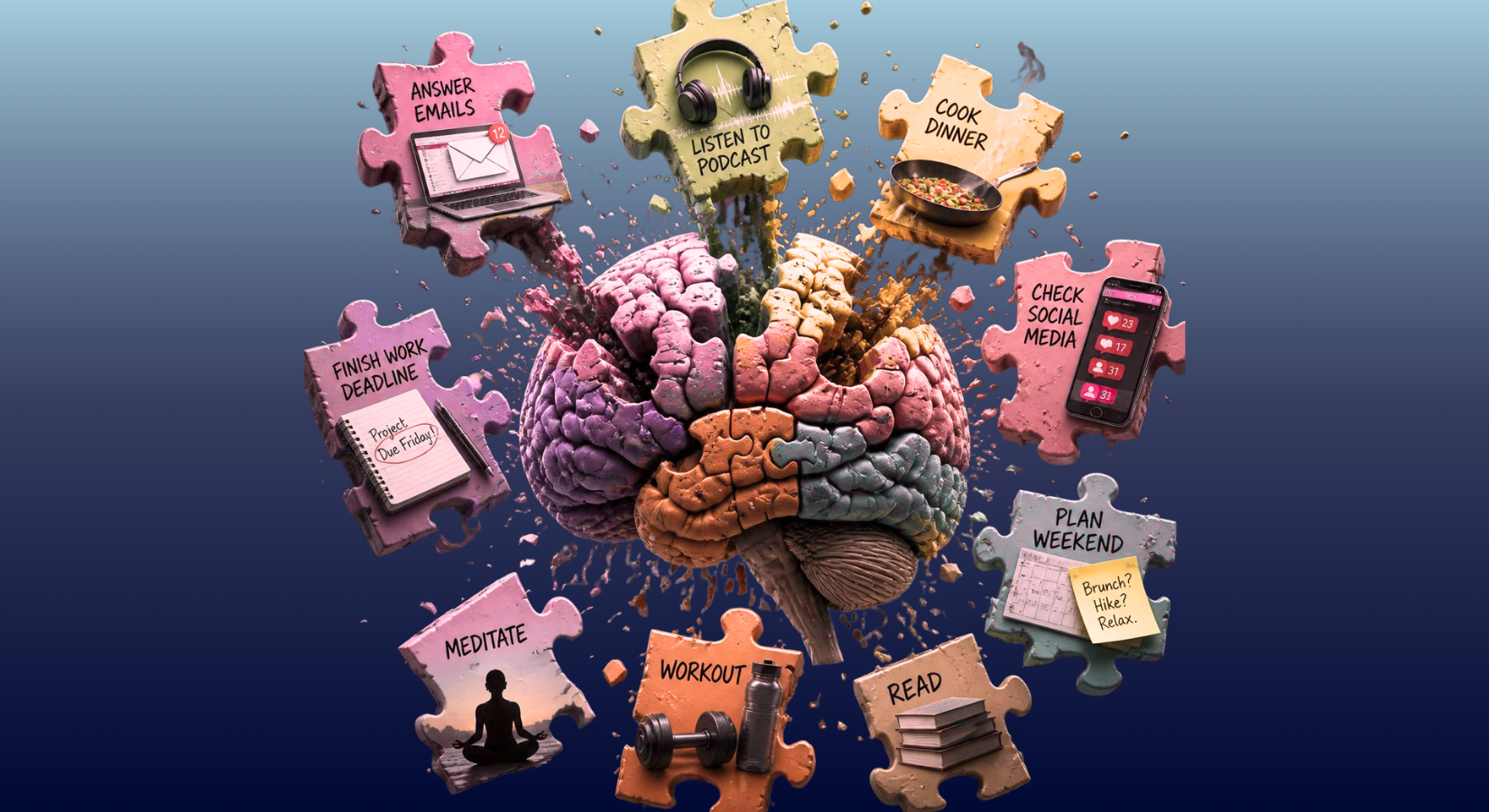
Researchers sometimes describe this as “attention residue.” Part of your brain remains attached to the previous task while another part attempts to engage with the new one. It’s a little like trying to have six conversations simultaneously, while everyone keeps changing the subject every thirty seconds.
Fragmented days often feel strangely unsatisfying. You may have been busy constantly, yet still feel as if you accomplished very little. That’s because deep attention and fragmented attention simply operate differently in the brain.
Your brain is highly vulnerable to novelty
Your distractibility is not entirely accidental.
Human brains are biologically wired to notice novelty. From an evolutionary perspective, this was extremely useful. A sudden movement in the bushes, an unfamiliar face, or a strange sound in the environment could all signal opportunity—or danger. Brains that noticed new things survived more often than brains that ignored them.
Modern technology takes full advantage of this ancient wiring. Social media notifications, breaking news alerts, autoplay videos, endless scrolling, email refreshes, and variable reward systems all tap into the brain’s dopamine-based anticipation systems. For you science geeks out there: dopamine is not really the “pleasure chemical” people often imagine it to be. It’s more closely associated with motivation, prediction, reward-seeking, and anticipation.
That’s partly why humans sometimes refresh their inboxes like raccoons repeatedly checking the same empty trash can: Maybe THIS time something exciting will appear!

Researchers have even compared some digital reward structures to slot-machine reinforcement schedules, because unpredictability keeps the brain engaged. You don’t know when the next interesting thing is coming, so your attention remains hooked “just in case.”
Unfortunately, constant novelty comes with consequences. The brain begins adapting to high levels of stimulation, which can make slower activities—reading, writing, deep conversation, reflective thinking, even simple quietness—feel oddly difficult at first.
Many people now report becoming restless within just a few minutes of silence because their attentional systems have become increasingly overstimulated.
Stress changes the way attention works
Here’s an interesting fact: attention changes dramatically under stress.
When humans become anxious or overwhelmed, the brain reallocates resources toward threat detection and survival-oriented processing. Again, from an evolutionary standpoint, this makes perfect sense. If your ancestors were being chased by a tiger, the brain didn’t say, “Before we panic, let’s spend twenty minutes thoughtfully reviewing our long-term strategic goals.” Instead, their attention narrowed toward the possible danger…and how to escape it.

Modern stress can trigger very similar processes even when no actual tiger is involved. Chronic uncertainty, emotional overload, financial worries, information saturation, health concerns, and nonstop incoming demands can all push the nervous system into a more reactive state, and reactive brains are not especially good at calm, sustained concentration.
Under stress, many of us end up rereading the same paragraph three times without absorbing it, lose track of our conversations midway through, or suddenly find ourselves standing in the kitchen with absolutely no memory of what mission brought us there in the first place.
There’s a biological basis for these glitches: stress hormones influence attention, working memory, emotional regulation, and cognitive flexibility. Overwhelmed brains behave differently because overwhelmed brains actually are functioning differently in those moments.
Your emotional bandwidth is finite
Additionally, attention is not just a thinking process; it’s also an emotional process.
As cognitive overload increases, emotional bandwidth decreases. The brain has fewer available resources for patience, reflection, empathy, creativity, and flexible thinking. As a result, humans can become more irritable, impulsive, forgetful, emotionally reactive, or unusually sensitive to small frustrations. It’s not necessarily about personality. Sometimes it’s simply about capacity.
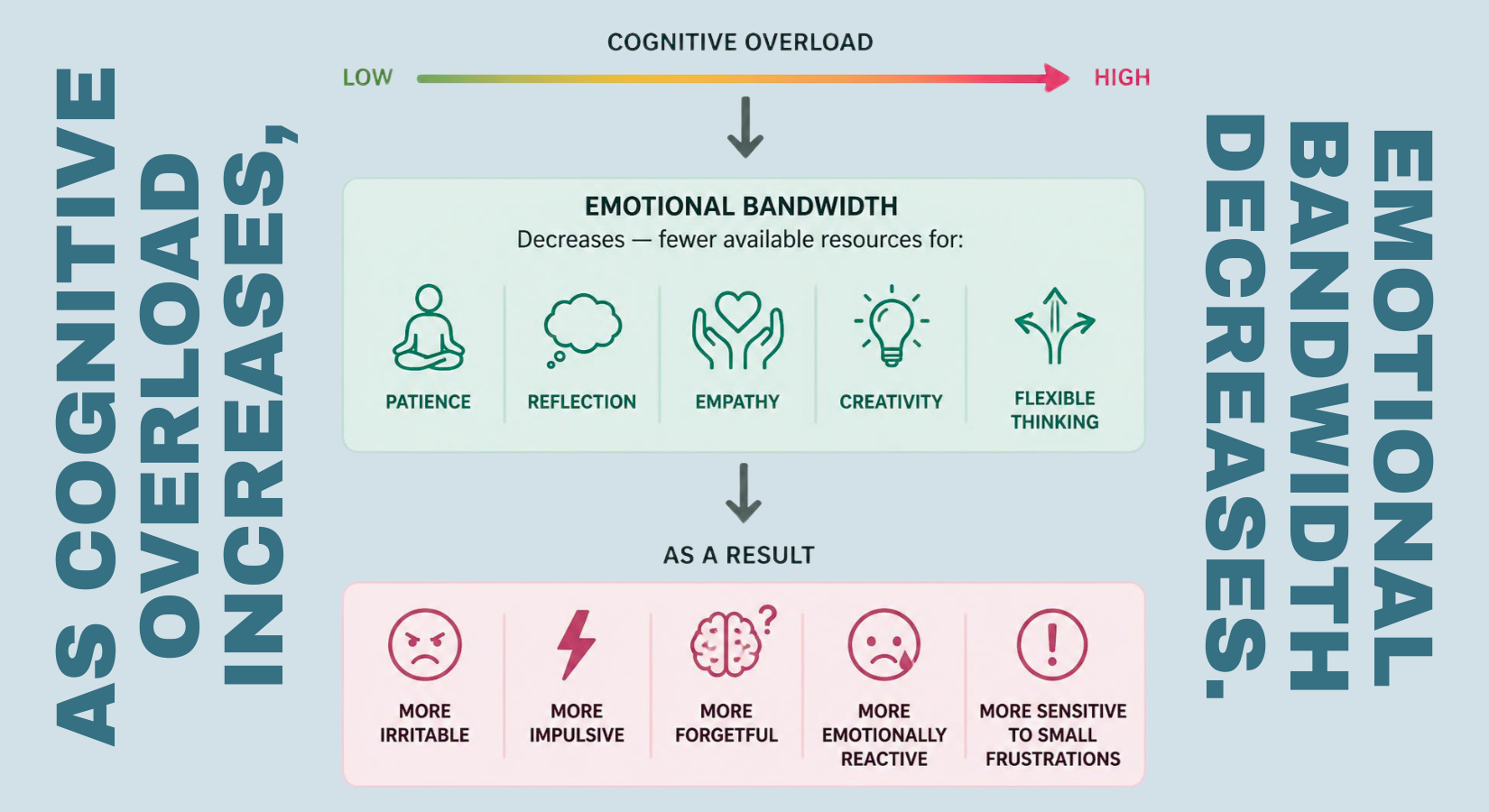
A brain juggling too many competing inputs starts prioritizing efficiency over nuance. Tiny inconveniences feel enormous, and minor decisions become exhausting. Overloaded humans often lose access to reflection. We react instead of think.
Not surprisingly, many modern people describe themselves as simultaneously “tired and wired”—mentally exhausted while somehow unable to fully settle down. The brain keeps scanning and monitoring even during moments that are supposed to feel restful.
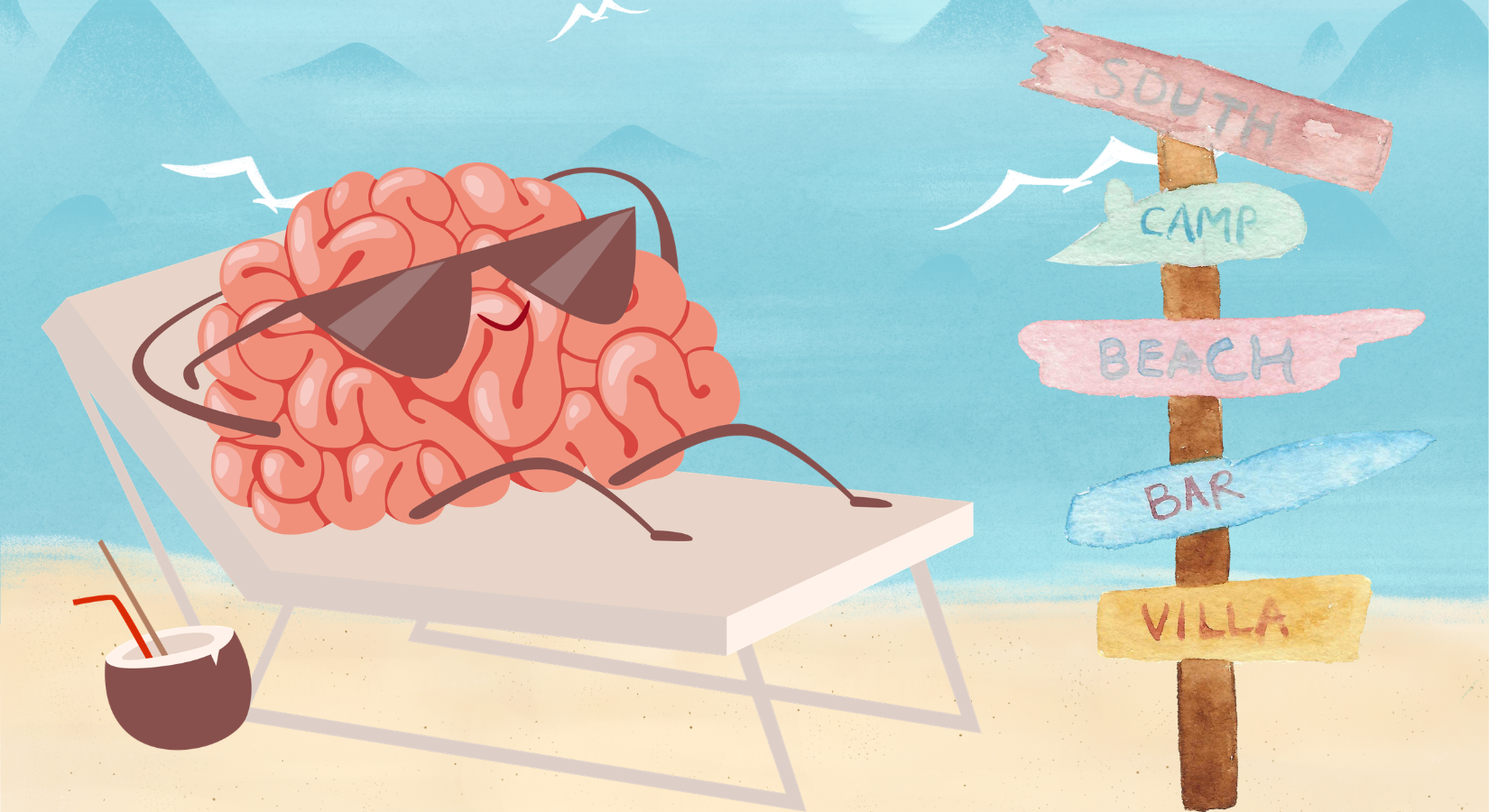
How the brain restores attention
The good news is that human brains also appear to possess mechanisms for attention restoration.
Researchers in environmental psychology, including work associated with Stephen Kaplan and attention restoration theory, suggest that natural environments may help replenish depleted attentional systems. Nature appears to engage what researchers sometimes call “soft fascination”—stimuli that gently hold our attention without demanding intense mental effort. Flowing water, birdsong, rustling leaves, ocean waves, moving clouds, and campfires all seem to allow the brain to rest from constant executive-control demands.
Studies have linked time in natural environments with improvements in mood, stress recovery, attention, and cognitive functioning. Even brief exposure to green spaces appears beneficial. And importantly, restoration does not necessarily require a wilderness expedition involving a backpack and tent. Sometimes attention recovers through surprisingly small experiences: a quiet walk without headphones, finishing one task completely, reducing visual clutter, sitting silently for a few minutes, looking out a window, or simply spending time without constant incoming information.
In many cases, the brain does not need better stimulation. It simply needs less stimulation.

DO try this at home
If your attention has been feeling especially scattered lately, try approaching it less as a “what’s wrong with me” issue and more as an energy-management issue. Instead of asking, “Why can’t I force myself to focus?” try asking, “What is consuming my cognitive resources right now?”
For the next week, experiment with a few tiny shifts:
- Try doing one thing completely from start to finish without simultaneously checking messages or bouncing between tabs. Notice what it feels like to allow your brain to remain in one cognitive lane for more than a few uninterrupted minutes.
- Take a short walk without music, podcasts, or scrolling. At first, this may feel strangely uncomfortable. That discomfort itself is interesting information. Modern brains often become so accustomed to constant stimulation that quietness initially feels unnatural.
- Pay attention to visual overload in your environment. Open tabs, cluttered workspaces, nonstop alerts, and unfinished tasks all compete quietly for mental bandwidth. Sometimes your desk is not just messy. Sometimes your desk is actively yelling at your nervous system.
- And finally, begin noticing where your attention automatically goes throughout the day—not judgmentally, but scientifically. Attention tends to follow novelty, uncertainty, emotional stimulation, and reward anticipation. Once you recognize those patterns, you begin understanding your brain instead of fighting it.
Your attention is your life
Perhaps that’s the biggest takeaway from all of this: attention shapes far more than productivity. It shapes relationships, memory, emotional regulation, creativity, learning, and even our sense of meaning. Quite literally, what we consistently pay attention to becomes our lived experience.
We modern humans are navigating attentional demands unlike anything our brains evolved to handle. We’re surrounded by deliberately engineered distractions, endless novelty, emotional stimulation, alerts, updates, and competing demands for our mental bandwidth. Under these conditions, struggling to focus does not necessarily mean you’re lazy or undisciplined. It may simply mean you’re human.
Brains are living organs, not machines. They become overloaded. They require recovery. And they function best when given occasional opportunities for sustained focus, genuine rest, and moments of calm.
So maybe the goal is not perfect optimization. Maybe the goal is simply becoming more intentional about where your attention goes. Because, one day at a time, your attention becomes your life.
>Excellent article, Denise. I love the scientific explanation of brain behavior, what causes over stimulation and how we can save ourselves from our own habits. Thank you for sharing this timely information with us.