
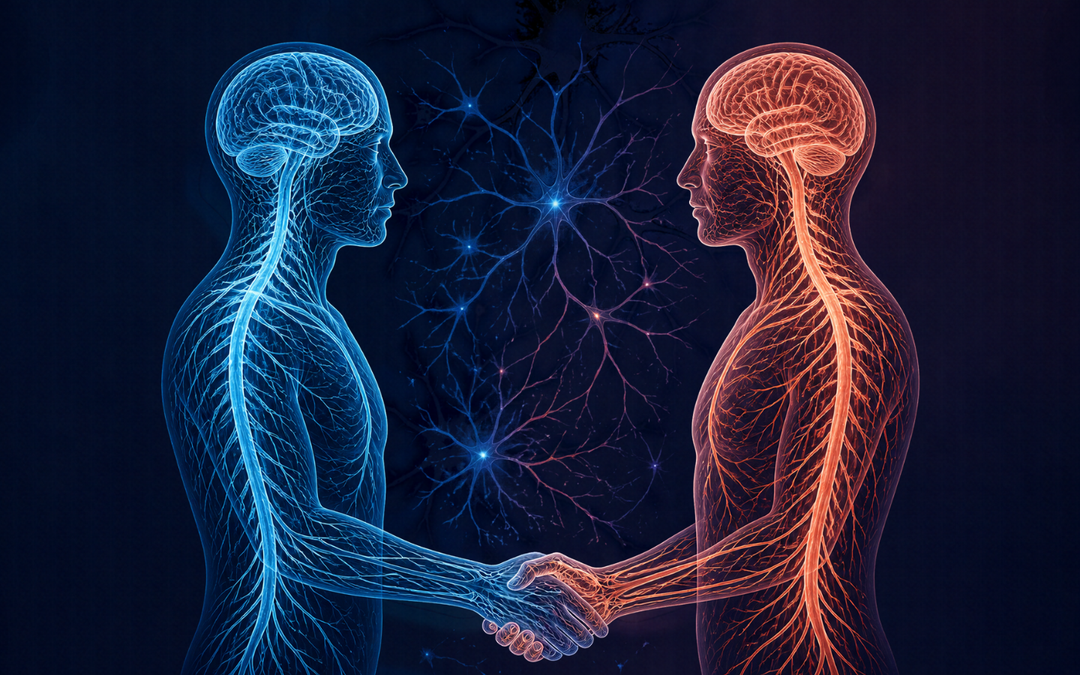
Have you ever walked into a room and known, almost instantly, that something was wrong? There was no announcement. No one handed you a memo marked Attention: Everyone here is tense. You just knew.
Or maybe you’ve experienced the opposite. You arrive at dinner tired and preoccupied, only to find everyone laughing, telling stories and having a wonderful time. Before long, you’re laughing, too. Your problems haven’t disappeared. Nothing about your circumstances has actually changed. But somehow, you have.
Human beings do this all day long. We influence one another’s emotional states, frequently without realizing we’re doing it. Psychologists call the phenomenon emotional contagion, and after several decades of research, we know it’s more than a colorful metaphor. Emotions really can spread between people, through groups and even across enormous online social networks.
In fact, one of the more useful things to know about human communication is this: You don’t just bring yourself into a room. You bring a nervous system that other nervous systems can respond to. And, of course, they’ve brought theirs along, too. We’re all walking around broadcasting and receiving emotional information, usually without giving much thought to the transmission.
We’re constantly reading one another
Emotional contagion has been studied formally since at least the early 1990s, when psychologists Elaine Hatfield, John Cacioppo and Richard Rapson described our tendency to automatically mimic and synchronize other people’s facial expressions, vocalizations, postures and movements – and, in the process, sometimes begin to converge emotionally.
So, how does your coworker’s anxiety become your anxiety? There probably isn’t one answer. Emotional contagion appears to involve several overlapping processes. We automatically pay attention to faces, voices, posture, movement, tempo and dozens of other social signals. We may subtly mimic another person’s expression or body position without consciously intending to. We hear tension in a voice, notice someone speaking faster than usual, see a jaw tighten or shoulders rise, and begin adjusting our own behavior in response. Sometimes our physiology even starts coordinating.
In a fascinating 2024 experiment, researchers paired friends and strangers and designated one person the emotional “sender.” That person watched a positive, negative or neutral film clip while the other person simply watched the sender’s face. The observers showed spontaneous facial mimicry and emotional contagion, along with increased physiological synchrony. Particularly interesting: during positive emotions, friends showed stronger emotional and cardiac synchrony than strangers.
So, that experience of being around someone you know well and sensing their mood before they’ve told you anything isn’t necessarily your imagination. You may actually be very good at reading them. After hundreds or thousands of interactions with someone, you know what their “normal” looks and sounds like. A tiny change in voice, expression or movement may be enough to tell you that something’s up long before they say, “We need to talk.” (Four words capable of changing anyone’s physiology.)
But what about those famous mirror neurons?
By now, I’m sure you’ve heard of ‘em. It’s worth mentioning mirror neurons, because it’s nearly impossible to talk about emotional contagion without somebody bringing them up.
Mirror neurons were originally discovered in macaque monkeys: certain neurons fired when a monkey performed an action, and when it observed another individual performing the same action. The discovery eventually led to enormous interest in whether analogous “mirror systems” in humans might help explain imitation, empathy and our ability to understand other people’s emotional experiences.
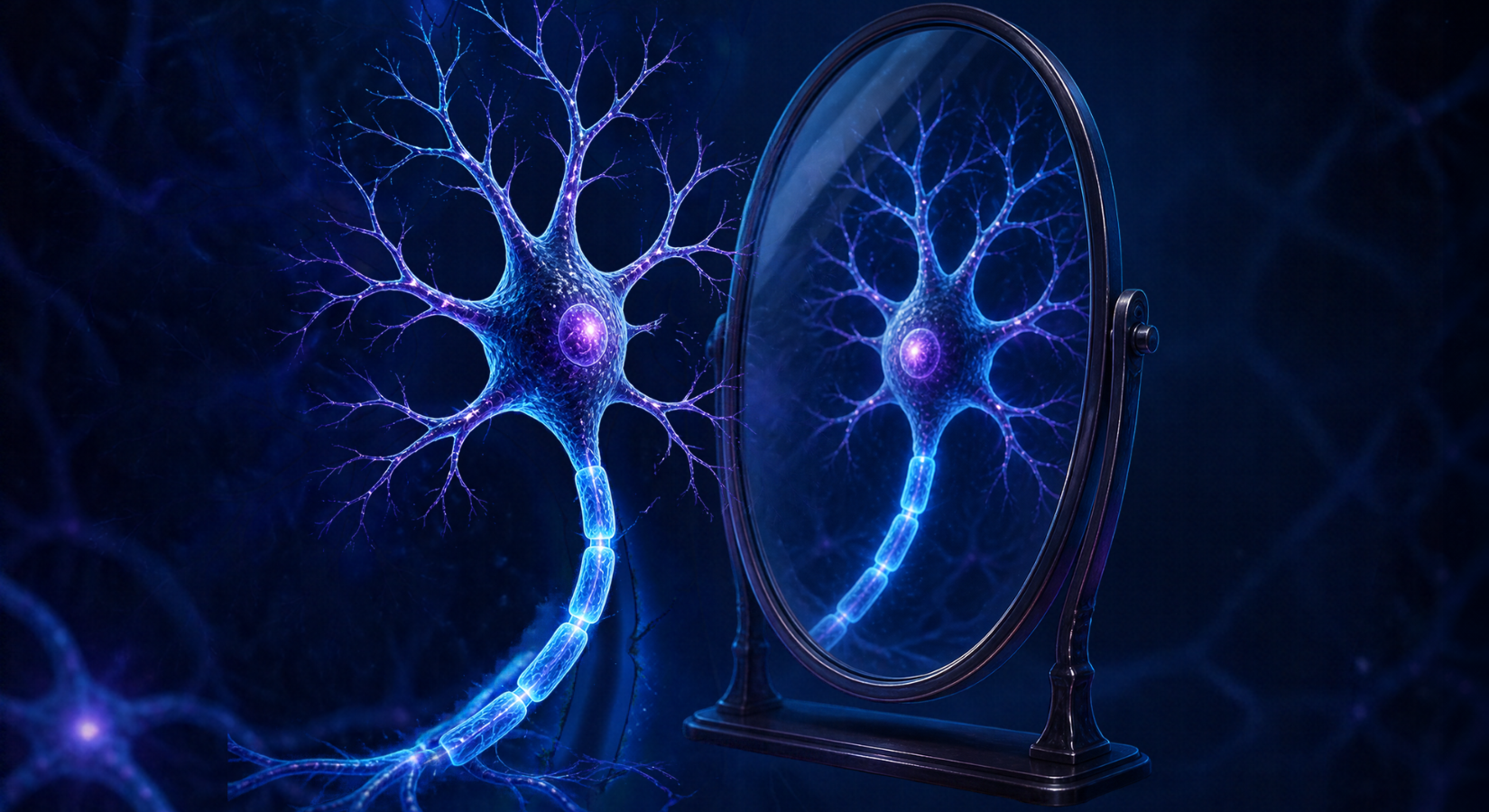
Then popular psychology got hold of the idea and, well, things got a little enthusiastic. You’ve probably encountered claims that mirror neurons explain everything from empathy and love to why you cry at movies. At some point, those poor mirror neurons were being asked to explain practically the whole human experience.
However, the actual neuroscience doesn’t support anything that simple. A 2025 neuroimaging meta-analysis found partially overlapping neural activity associated with emotional mimicry and emotional contagion, involving several brain regions and networks. The researchers concluded that mirror-system processes may contribute to emotional contagion, but they aren’t the whole story. Emotional systems, sensory processing, motor systems and other neural networks appear to work together.
So, mirror neurons are important. They just don’t get to take credit for everything.
One mood can change an entire group
This is where emotional contagion becomes especially interesting, because one person really can change a room.
In a classic experiment by organizational psychologist Sigal Barsade, groups participated in a managerial exercise while a trained participant deliberately displayed a particular mood. Group members began to converge emotionally with that person. More importantly, the emotional shift affected what happened next: positive emotional contagion was associated with greater cooperation, less conflict and better perceived task performance.
Think about the implications. We tend to imagine meetings as exchanges of information. Someone presents an idea, someone else supplies data, people ask questions and decisions are made. But there’s another communication channel running simultaneously. Someone is enthusiastic. Someone is bored. Someone is irritated. Someone is worried. Someone is calm. And that emotional information is circulating around the table right along with the spreadsheets and PowerPoint slides.

We’ve all watched this happen. One chronically negative person can turn a perfectly ordinary discussion into a grievance session. One anxious person can make a manageable problem suddenly feel ominous. Conversely, one genuinely enthusiastic person can make other people lean forward, contribute ideas and become more interested themselves.
And sometimes it happens remarkably fast. You can almost feel a room tip. One person sighs, another rolls their eyes, someone else says, “Well, this ought to be interesting,” and suddenly a meeting that hadn’t even started yet is somehow already going badly.
That’s emotional contagion at work.
Leaders are emotional amplifiers
Now, give one of those people status. Leaders have a particularly interesting position in emotional contagion because people pay attention to them. When we’re uncertain about a situation, we often look toward someone with authority for information about how seriously we should take it. The leader is talking, of course, but everyone is also reading the leader.
Psychologists Thomas Sy, Stéphane Côté and Richard Saavedra demonstrated this experimentally. When leaders displayed positive rather than negative moods, group members subsequently reported more positive and less negative moods themselves, and the overall emotional tone of the group changed. The leader’s mood also affected aspects of group coordination and effort.
The point isn’t that leaders should always transmit positive emotion. It’s that they should recognize how much their emotional state influences the people around them. A leader who walks into a meeting visibly panicked communicates something before saying a word. So does the leader who appears contemptuous, irritated, bored or defeated. And so does the leader who communicates, This is serious. We have work to do. And we can handle it.
Calm is contagious, too.
Your family has an emotional climate
Of course, you don’t have to manage anybody for this to matter. Families, friendships and intimate relationships are tiny emotional ecosystems. Spend enough time together and we become extraordinarily skilled at detecting changes in one another.
Your partner says, “I’m fine,” and you know they’re not fine. Your teenager walks into the kitchen, opens the refrigerator and says absolutely nothing, and you know something happened. Your friend answers the phone with one syllable – “Hi” – and you immediately ask, “What’s wrong?”
We sometimes describe these moments as intuition, but there’s usually information available. We’re hearing subtle changes in pitch, tempo and volume. We’re seeing facial tension, gaze, posture and movement. We’re comparing all of that with thousands of previous interactions with this particular person. Your brain is essentially saying, Nope. That’s not the usual “hi.” And then we begin responding.
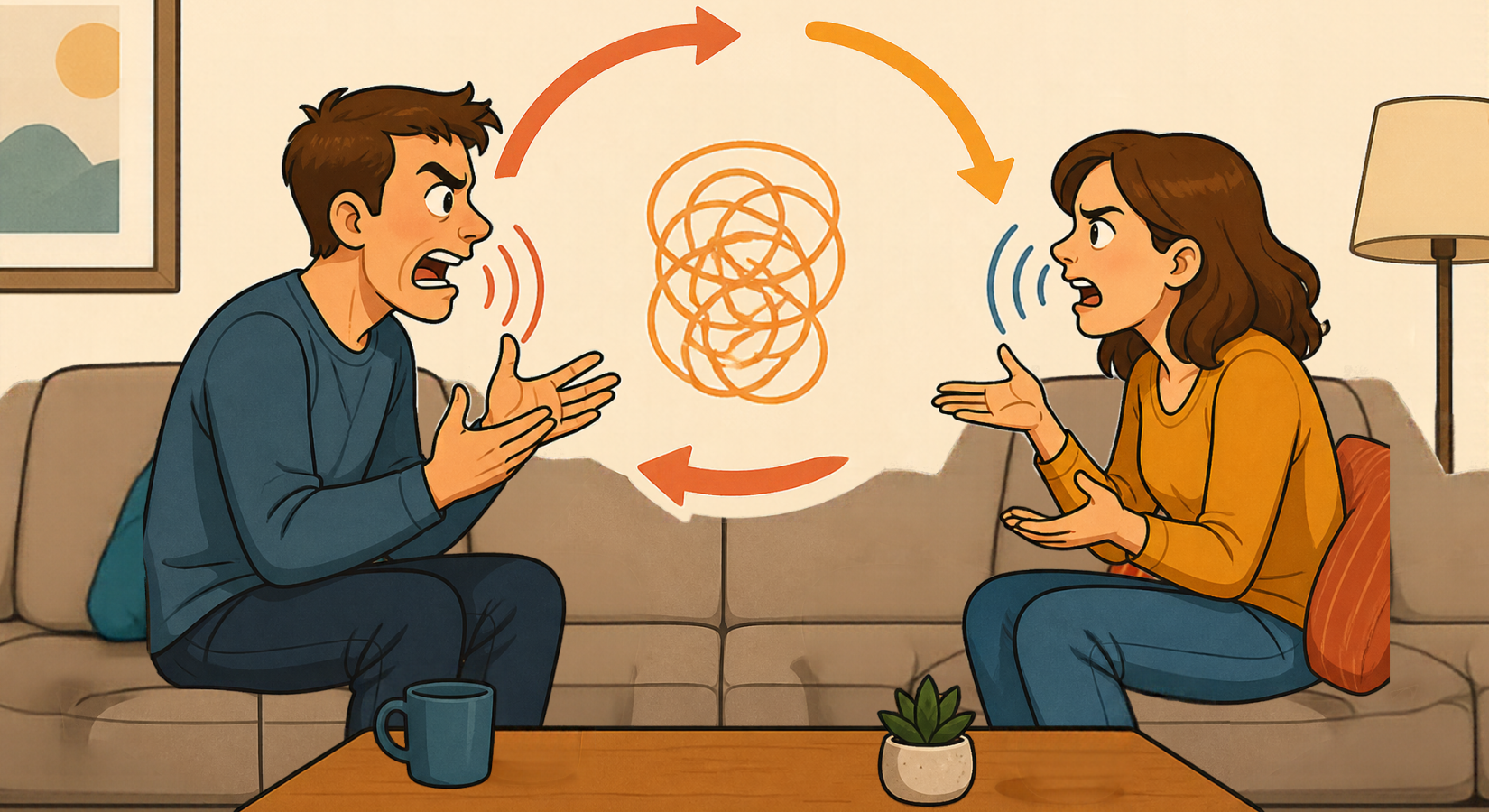
Here’s where things can go sideways. Someone becomes tense. The other person detects the tension and becomes tense in response. The first person detects that tension and becomes even more tense. Voices become sharper, facial expressions harden, responses get shorter, and each person’s behavior becomes new emotional information for the other. Pretty soon, neither person can remember why they were arguing about the dishwasher.
Emotional contagion can become an emotional feedback loop. Each person is simultaneously reacting to and contributing to the emotional climate. But there’s some very good news tucked inside this idea: if one person can help escalate the loop, one person can also help interrupt it.
You don’t necessarily have to convince the other person to calm down first. You can simply decline to keep adding fuel.
And then we invented social media
For most of human history, emotional contagion required relatively close contact. Then we created technology capable of placing millions of emotional expressions in front of millions of people within seconds. Naturally, researchers got interested.
In a now-famous 2014 experiment involving 689,003 Facebook users, researchers slightly reduced the amount of either positive or negative emotional content appearing in people’s News Feeds. People exposed to less positive content subsequently used fewer positive and more negative words themselves; reducing negative content produced the reverse pattern. The effects were small, but across such an enormous population they provided experimental evidence that emotional influence could occur online even without face-to-face interaction or the usual nonverbal cues.
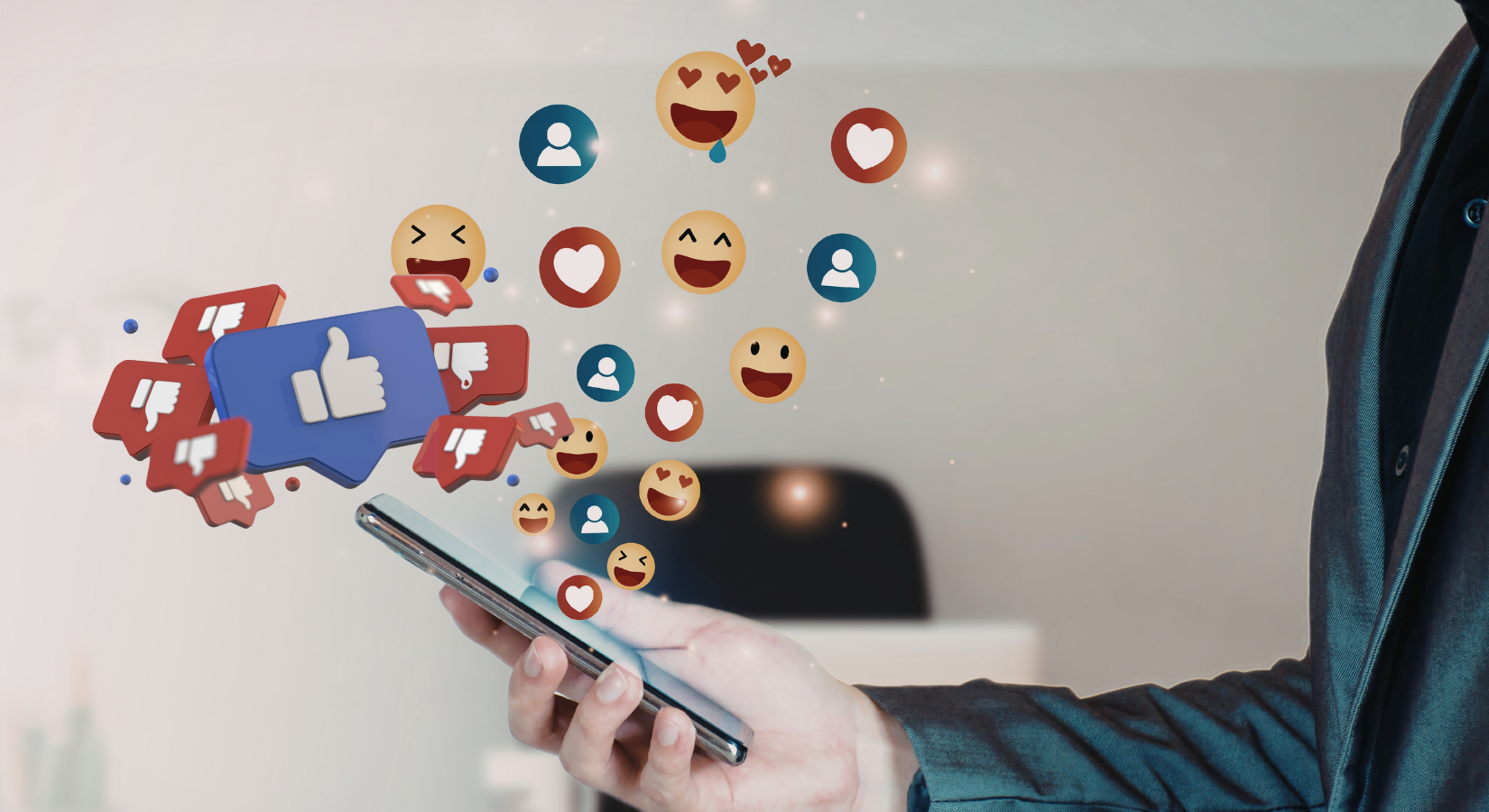
Online emotion also has another fascinating characteristic: the platforms give us immediate social feedback – likes, shares, comments and reposts. Researchers William Brady and colleagues analyzed 12.7 million tweets from more than 7,000 users and found that when expressions of moral outrage received greater social reinforcement, users were more likely to express outrage again in the future. People also adapted their outrage expression to the norms of their particular social networks.
In other words, we’re not simply catching emotions online. We’re also learning which emotions get rewarded.
And there’s an additional wrinkle. In a 2023 Nature Human Behaviour study, Brady and colleagues found that people systematically overestimated how outraged other people actually were, based on their social-media posts. That overperception then contributed to exaggerated beliefs about how hostile groups were toward one another. The effect was particularly pronounced among people who relied more heavily on social media to learn about politics.
Think about that cycle for a moment. We encounter outrage. We perceive more outrage than may actually exist. We conclude that everybody is furious. That changes what we express, and other people see our expression and draw conclusions about how furious everybody is.
And around we go. No wonder five minutes of innocent scrolling can occasionally leave you wondering whether civilization will survive until lunchtime.
Are negative emotions more contagious?
It’s tempting to say yes. Negative information often captures attention quickly, and from an evolutionary standpoint, that makes sense. A relaxed face across the campfire probably doesn’t require immediate action. A terrified face might.
But the evidence doesn’t justify the simple claim that negative emotions always spread faster or farther than positive ones. Different emotions behave differently under different circumstances. Relationship closeness matters. Group norms matter. Attention matters. The intensity of the emotion matters. The person transmitting it matters. And the 2024 friend-versus-stranger study I mentioned earlier actually found particularly strong contagion of positive emotion among friends.
So perhaps the better lesson isn’t “bad moods are more contagious.” It’s that emotionally salient information gets our attention, and once our attention has been captured, social processes can amplify what happens next.
You don’t have to catch everything that’s going around
This brings us to the good news: Knowing that emotions can be contagious doesn’t mean we’re helpless emotional sponges. We regulate emotions. We reinterpret situations. We redirect attention. We can recognize another person’s emotional state without automatically adopting it ourselves. And sometimes simply noticing what’s happening gives us an opportunity to interrupt it.
Imagine someone comes at you emotionally at a 9. You have choices. You can meet them at 9. You can raise them to 10. Or you can stay at 4. That’s emotional regulation.
And staying at 4 doesn’t mean becoming cold, robotic or maddeningly serene while someone else is upset. (“I see that you’re angry, but I have achieved inner peace” is unlikely to improve most arguments.) You can be empathic and engaged without matching another person’s intensity.
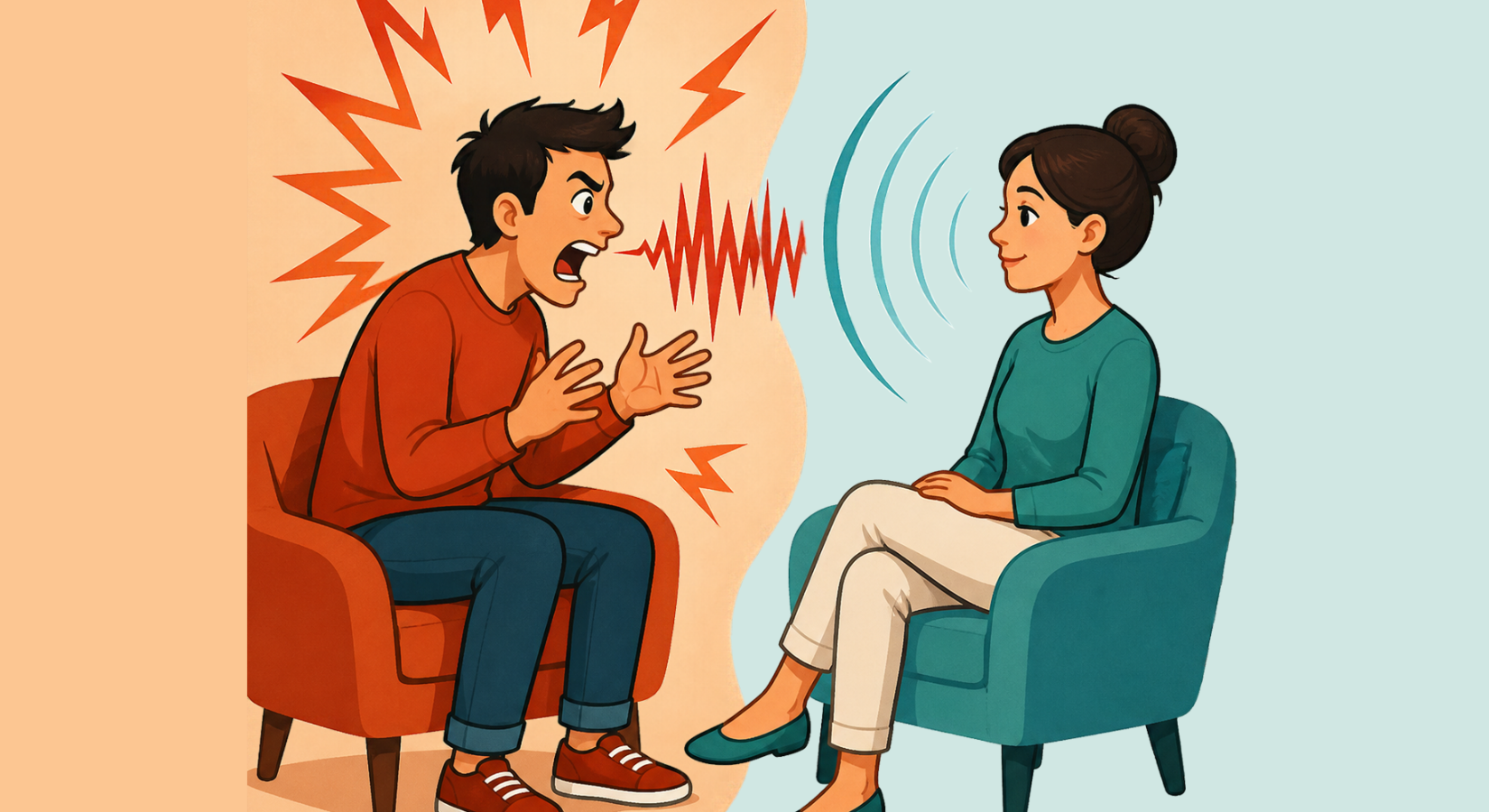
In communication training, we often focus on what we’re saying: choose the right words, ask good questions, listen carefully, paraphrase, don’t interrupt. All good advice. But communication also has an emotional layer. Before you’ve finished your first sentence, the other person’s nervous system is already receiving information from your face, voice, pace, posture and movement.
That’s why slowing your speech can sometimes slow an interaction, why lowering your voice can encourage someone else to lower theirs, why an authentically warm greeting can alter the beginning of an encounter, and why one calm person can sometimes stabilize an anxious group.
DO try this at home
1. For one day, become an emotional-contagion detective. Don’t try to change anything at first. Just notice. Pay attention not only to other people’s moods but to what happens to your emotional state after you encounter them. Who leaves you calmer? Who energizes you? Who makes everything seem slightly more catastrophic than it did five minutes earlier? Notice what happens in meetings, at dinner, on the phone, standing in line and – especially! – after ten minutes on social media.
2. Try the experiment in reverse. Before you walk into a room, ask yourself, What am I about to bring in there? Not what are you going to say, but what emotional information are you carrying in your face, voice, pace and posture? You don’t have to change it. Just become aware that you’re transmitting it.
3. Experiment with your emotional volume control. The next time somebody comes at you at an 8 or 9, resist the almost automatic temptation to match them. Try staying at 4 or 5. Slow your speech slightly. Let your volume drop rather than rise. Relax your shoulders. Pause before responding. Rather than surrendering the conversation or invalidating the other person’s feelings; you’re simply refusing to make escalation a team sport. Then watch what happens.
4. Try changing an opening. Walk into one meeting, phone call or family interaction with deliberate warmth. Greet people by name. Make eye contact. Let your voice communicate that you’re genuinely glad to see them. Then notice whether the emotional trajectory of the interaction differs. Initial impressions can often establish an emotional starting point.

5. Try separating empathy from absorption. When someone you care about is anxious, angry or discouraged, mentally label what’s happening: She’s anxious. He’s frustrated. They’re worried. Then add one quiet sentence to yourself: I can understand this without becoming it. That little bit of psychological distance can help you remain available to another person without automatically joining the emotional state.
6. Try an experiment with your phone. Before opening social media, rate your mood from 1 to 10. Spend ten minutes scrolling normally. Stop and rate it again. Don’t analyze or judge the result; just collect the data. Do it a few times. You may discover that certain online environments consistently alter your emotional state – and that’s useful information to have before handing over another hour of your nervous system.
7. Finally, ask yourself the slightly more uncomfortable question: What happens to other people after they’ve been with me? You don’t have to police every emotion or plaster on a happy face. Authentic communication includes sadness, anger, fear, disappointment and frustration. Healthy relationships require room for all of them. Nobody needs to become the relentlessly cheerful person everyone secretly avoids at parties.
The goal isn’t permanent emotional positivity. It’s emotional intentionality. If you’re frightened, you can communicate concern without spreading panic. If you’re angry, you can express anger without escalating everyone else’s. If a room is anxious, you can choose not to add another unit of anxiety to the atmosphere. And when something online makes your blood boil, you can notice that another person’s emotional state may have just arrived in your nervous system before you hit “share” and deliver it to 500 more.
So, what should we take away from all of this?
Emotional contagion is a collection of social and physiological processes through which human beings continually influence one another. We read faces and voices. We respond to posture and movement. We sometimes mimic one another. Our physiology can synchronize. Relationships affect the process. Status affects it. Social reinforcement affects it. And technology has given emotional information a distribution system our ancestors could never have imagined.
But perhaps the most useful finding isn’t simply that emotions spread. It’s that we participate in the spreading. We’re receivers of emotional information, but we’re also transmitters. Every time we enter a meeting, answer a phone, walk through the front door, greet a stranger, respond to someone who’s upset or post something online, we’re contributing something to the emotional environment. Every interaction has content, but it also has climate.
We spend a great deal of time thinking about the information we bring into a conversation: What should I say? What’s my point? How can I explain this? Maybe every now and then it’s worth asking one more question: Beyond my words, what feeling am I bringing into the room?